-
read more
Between 1920 and 1927 Henry Ford's Dearborn Independent published weekly articles on "The International Jew: The World's Foremost Problem." This American hero of the Industrial Age also spent much energy and money on the translation and publication of the infamous forgery "The Protocols of the Elders of Zion" as well as many other anti-Semitic tracts. In HENRY FORD AND THE JEWS, Neil Baldwin tells the story of anti-Semitism in the early 20th century through the biography of Henry Ford.
Latest News & Blog Postings
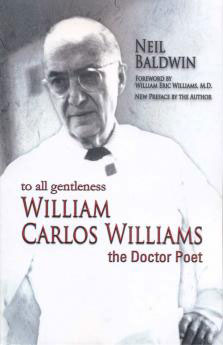
William Carlos Williams - New Trade Paperback Edition
A new trade paperback edition of this critically-acclaimed title has just been published by InPrint Editions/Black Classic Press in anticipation of William Carlos Williams' 125th birthday.
The richly-illustrated book (including vintage photographs from the Williams family archives) includes an illuminating new Preface by Neil Baldwin, as well as an Introduction by William Eric Williams, MD.
"...a deftly-written portrait. Neil Baldwin shows us a man who found joy in the noises of daily life, and who put poetry together 'with as much painstaking care as he took in the delivery of a new baby."
- Susan Stamberg, The New York Times Book Review
The Marshall Plan
The Marshall Plan and Its Meanings:
Europe 1947 - Iraq 2007
Half-a-century following the creation of this visionary remedy for post-WWII Europe, Neil Baldwin examines the practices of today’s global superpower and considers to what extent all modern wars -- and their imagined aftermaths -- are not alike. Neil will return to the Minneapolis Public Library this coming August 14th to talk about the life and work of William Carlos Williams.
Remembering (With a Smile) Wendy Wasserstein, 10/18/1950-1/30/2006
When I woke up this morning and glanced at the date on the front page of the newspaper, I realized with a start that my friend Wendy Wasserstein died two years ago.
Well...could I really call her a "friend?" She had so many people who were much closer to her than I was; but whenever I was with Wendy, she treated me as if I were the only other person in the world.
The MSU history professor's final 'handout' on the last day of class
'What I learned in History 110'
I spent the semester teaching this class, and now I would like to tell you what I learned. This is not a complete list, just the main things I thought of this morning.
Only 1.5% of their week is spent in my classroom
On the first day of classes at Montclair State University, I always ask my predominantly freshman and sophomore General Education undergraduates
about "the rest of their lives" outside of my particular course -- in
other words, the 98.5% of the time that I do not see them.
I emphasize these percentages because, I tell the students, it's important to put things in perspective. Of course being in college is important, especially when you want to graduate and embark upon a respectable career; and furthermore, when you are the first person in your family to attend college, alot of people are counting upon you to succeed.
Speaking of "succeeding," all you had to do in order to tell this was midterm week was walk around campus or sit in Cafe Diem and eavesdrop on students' conversations about how hard it was to tell "what he/she [the professor] wanted," and "how noisy my roommate was so I couldn't study," and "how late I was at the library last night," and "how many questions I left blank," and "what other people got on the test..."
Yesterday was midterm day in Prof. Baldwin's class. I sat at my desk at the front of the room, pretending to read a book but actually looking out over the 40 young people scribbling away, tearing sheets out of notebooks, coughing, clearing their throats, drinking Red Bull, eating health bars, and scribbling some more, and my mind wandered back to that survey on the first day of the semester seven brief weeks ago.